



Partnering on cutting-edge research
Academic institutions play an important role in driving and validating innovations – especially in the space sector. This also makes them essential partners for us at Airbus: in the UK alone, Airbus is funding PhDs and research projects at 17 different universities.
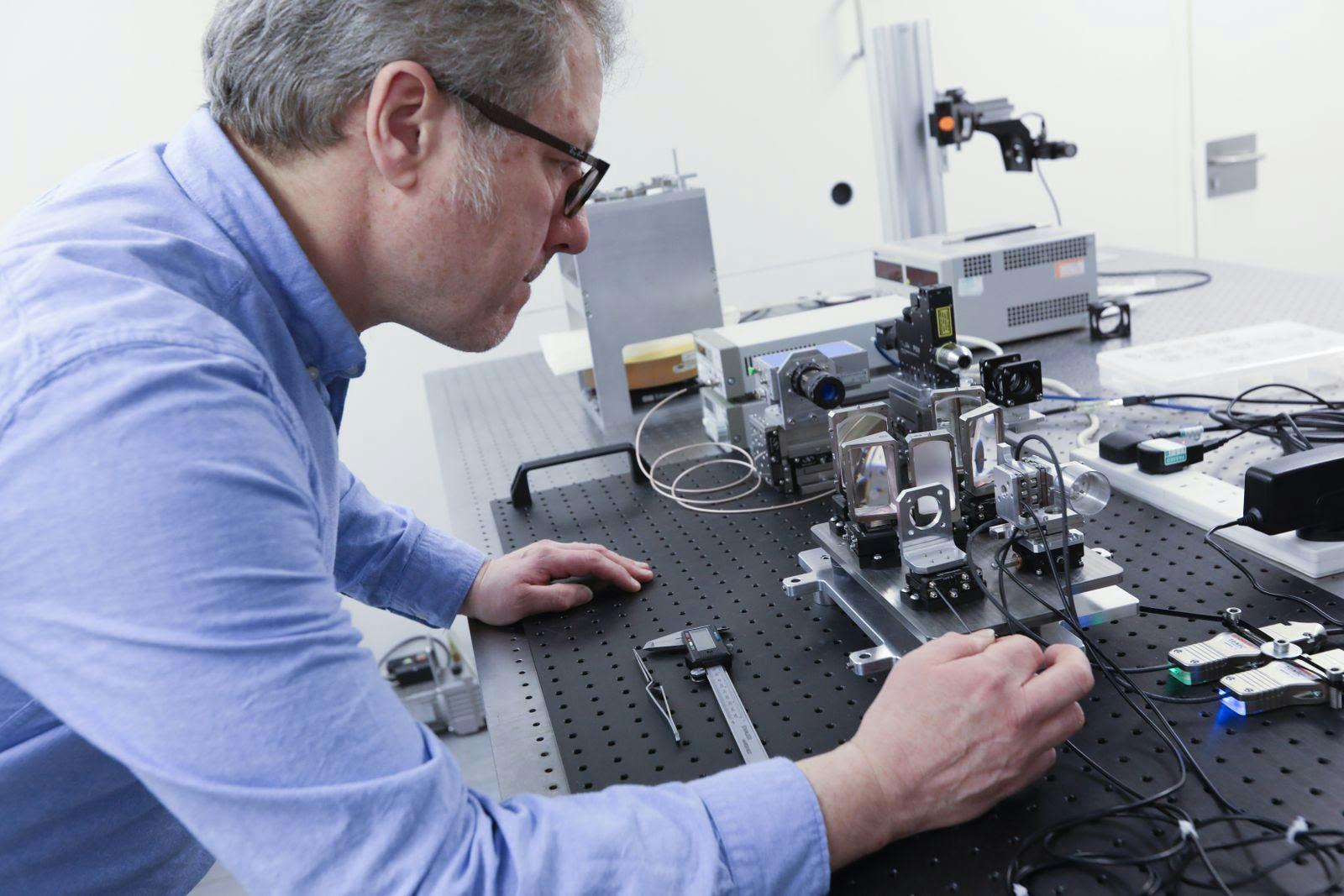
An expert in hyperspectral imaging, Wrexham University is exploring the potential space applications through its commercial arm, Glyndwr Innovations.
(Image source: Wrexham University)

At Wrexham University in North Wales, for example, cutting-edge research and development of precision optics and optical systems led to the creation of a commercial arm, Glyndwr Innovations. One of its areas of expertise is hyperspectral imaging.

A hyperspectral imager is a device that takes 300 images of a scene simultaneously across many narrow spectral bands (colours). It provides comprehensive image data, allowing you to spot even the tiniest colour variations and distinguish the composition of the scene in much greater detail. It has a wide range of applications, including the detection of skin cancer in humans, blight in crops, and even the presence of mineral deposits in landscapes.
“As a university, we can be a facilitator. Projects like this are what make the direction of our research both tangible and commercially viable.”
Professor Caroline Gray OBE, Director of the OpTIC Technology Centre, Wrexham University.
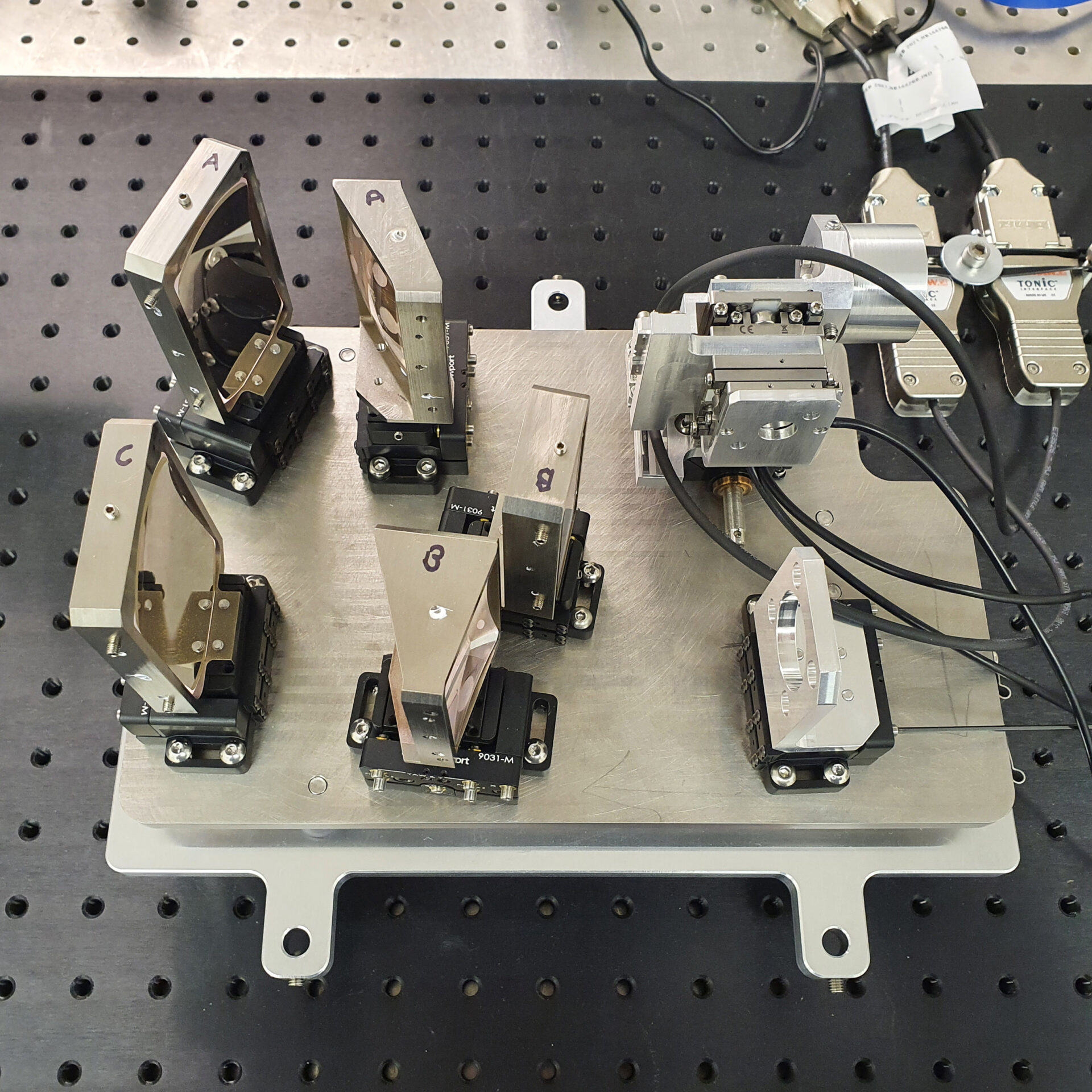
Paired with satellite imagery, hyperspectral imaging can also play a major role in environmental monitoring, as Professor Caroline Gray OBE, Director of the OpTIC Technology Centre at Wrexham University is well aware. “Tracing pollutants in air, water and soil, or detecting disease and insect infestations in forests are just a few examples of how we can benefit from hyperspectral imaging from space,” she says.
To further explore this potential, Glyndwr Innovations joined forces with Airbus. So far, the partnership has produced a lab based technology demonstrator that proves the system works as expected. “The next step will be to produce a flight-ready system,” Gray says.
For Professor Gray, this collaboration is a prime example of how the relationship between academia and industry should work: “As a university, we can be a facilitator. Projects like this are what make the direction of our research both tangible and commercially viable. This in turn helps us build our reputation and fund our work, while at the same time contributing to the growth of the skills and knowledge needed by the UK industry.”